Independent Research in Microbial Pathogenesis
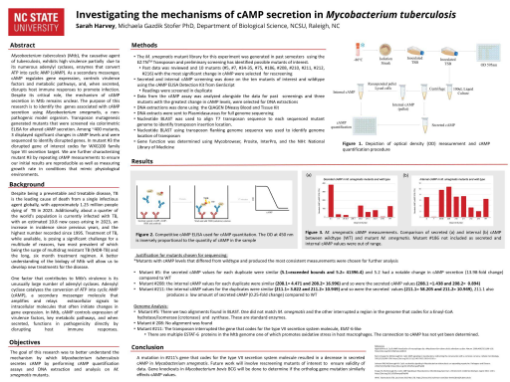
Over the last two semesters, this enrichment grant has allowed me to engage in independent research in microbial pathogenesis under the mentorship of Dr. Michaela Gazdik Stofer (Dr. G). My project focused on investigating cyclic AMP (cAMP) secretion in Mycobacterium tuberculosis (Mtb), using its non-pathogenic relative, Mycobacterium smegmatis (M. smeg), as a model organism. Because cAMP secretion is a critical virulence factor essential for the bacterium’s survival within a host, identifying the molecular mechanisms behind it provides potential targets for novel treatments. I was drawn to this specific project not only for its scientific relevance but also because of my interest in infectious diseases. Additionally, I applied to work in Dr. G’s lab specifically because of her expertise and reputation as an excellent mentor. I wanted an environment where I could step out of the traditional classroom and engage with the messy, complex reality of scientific research.
My primary responsibilities included screening a transposon mutant library, performing cAMP competition ELISA assays to quantify intracellular and extracellular cAMP, and developing a new, more cost-effective screening assay. Going into the experience, my goals were to develop these technical laboratory skills, gain confidence in experimental design, and improve my data analysis capabilities. While I ultimately achieved these goals, the process was not always straightforward and I experienced firsthand that research does not always go exactly as planned. There were many times when experiment after experiment would fail due to pipetting errors, contamination, or protocols that needed adjustment.Initially, these moments of failure felt like personal setbacks, leaving me frustrated and disheartened. However, this “trial and error” phase ultimately became the foundation of my growth. Over time, I learned to approach experimental challenges methodically and think analytically about my results. I became proficient in new lab techniques, such as ELISA assays (specifically using the multi-channel
pipette), and learned how to adapt when plans change, good or bad. For example, when our lab unexpectedly received free screening kits, I was able to pivot our original funding plan, redirecting resources toward consumables and growth media to further continue the project and begin developing our new assay. However, my proudest accomplishment was successfully screening and identifying mutants of M. smegmatis that exhibited altered cAMP secretion compared to the wild type.
Through these highs and lows, I learned a great deal about myself. Personally and professionally, I discovered that I am far more resilient and adaptable than I initially believed. I became more comfortable with uncertainty and more confident in my ability to troubleshoot independently. Academically, this experience further emphasized that I genuinely enjoy the entire process of scientific discovery, not just the successful outcomes, but also the critical thinking that comes with repeating experiments, refining protocols, and gradually improving results. This experience helped me see that persistence and attention to detail are just as important as initial understanding. However, none of this growth would have been possible without the relationship I developed with Dr. G. Her guidance, patience, and encouragement had a huge impact on my approach to obstacles in research. She consistently supported me through challenges, pushed me to think more critically, and helped me build confidence in my abilities. Knowing I had a mentor who genuinely believed in my potential changed how I approached obstacles. She not only taught me scientific techniques but also modeled what it means to be a thoughtful, supportive, and effective scientist, turning this opportunity into something truly transformative.
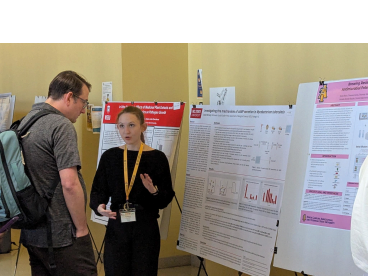
Finally, I had the opportunity to present my research at the North Carolina Branch of the American Society for Microbiology (NC ASM) annual meeting. Presenting at this conference
was a significant milestone as it allowed me the opportunity to communicate my findings to an audience of microbiologists, answer technical questions, and gain valuable feedback. Additionally, it helped me improve my scientific communication skills and provided a platform to network and explore different graduate school opportunities. Ultimately, this research experience has played a defining role in shaping my future aspirations. The hands-on experience with experimental design, data analysis, and molecular techniques has prepared me for more advanced research opportunities and strengthened my readiness for graduate-level study. More importantly, it confirmed my long-term goal: to pursue a career where I can contribute to scientific discovery and impact public health through the study of infectious diseases. Whether my path leads to graduate school, industry research, or another scientific field, I now feel highly prepared, motivated, and equipped with a clear sense of direction moving forward.
Thank you so much for allowing me this opportunity and supporting my interest in TB research! I have also included the poster that I presented at NC ASM and some other fun pictures that I took during this experience!
- Categories:


