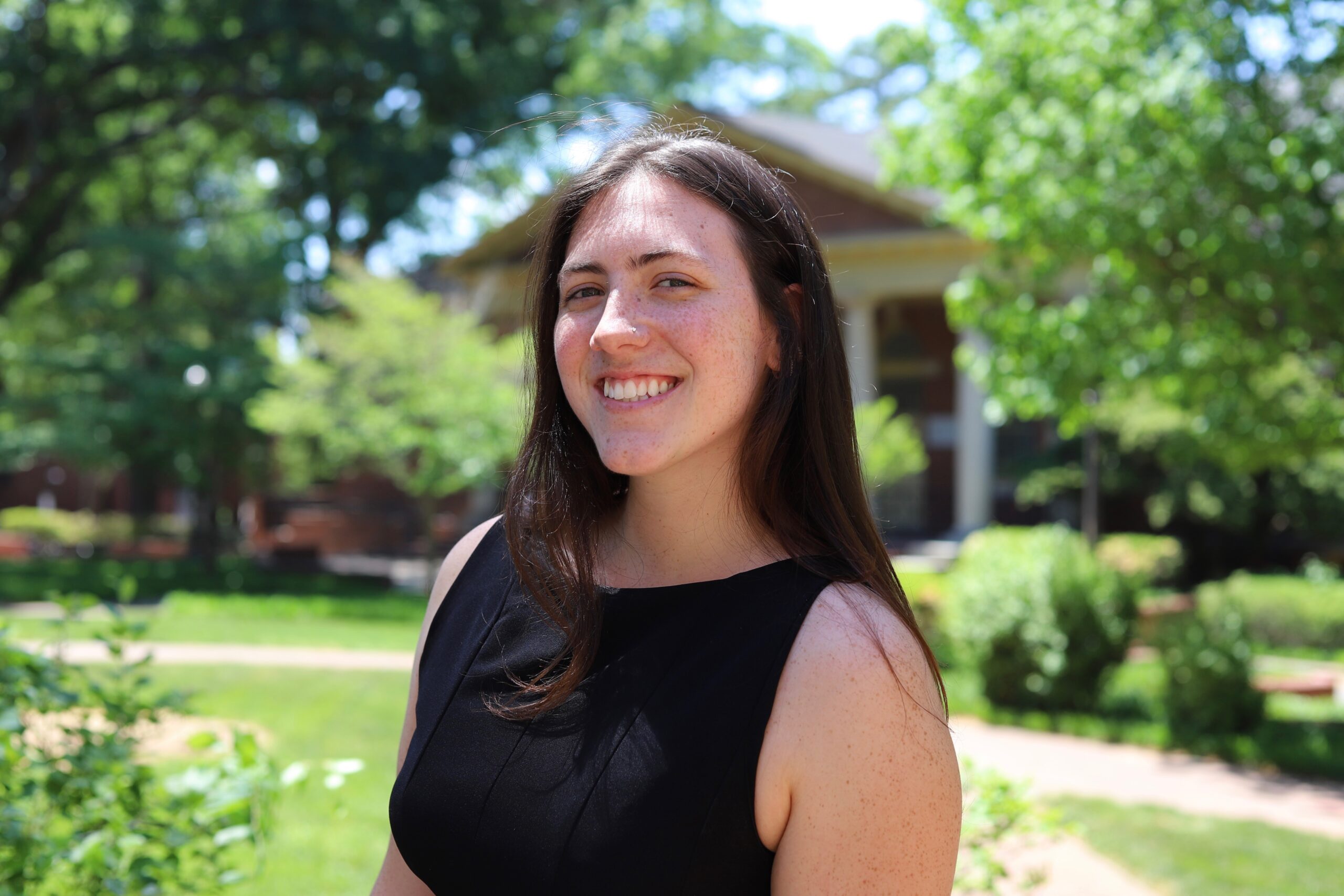
Goodnight Research Scholars: Talal, Grace, and Ben
By Angelina Yang

Meet Talal Aslam ’28, Grace Corkhill ’29, and Ben Fishback ’29. Learn how these undergraduate researchers got started, explore the meaningful projects they’re working on, and see how early research experience is paving the way for professional success.
Talal Aslam GSP ’28
What is your research?
My research centers around developing new electro-immuno therapies for cancer patients, by convincing the immune system to engage in more aggressive immune response that targets cancers cells throughout the entire body. We use novel technology to create an electric field that opens up cell pores temporarily, where we then deliver DNA that encodes for an anti-tumor immune response before the cell closes again.
Why did you get involved in research?
I originally wanted a taste of what a PhD could look like long term. I’m roughly two years in now and can say it’s been one of the best decisions I’ve made. I’ve made connections with professionals and developed skills that set me apart from the vast majority of undergrads in virtually any opportunity I apply for.
How has it impacted your professional development?
I’ve developed professional level proficiency in mammalian culture environments, aseptic technique, DNA cloning, rodent handling, and so much more. I have distinguished mentors willing to write recommendations for any opportunities in the future. Most importantly, I’m set on my decision to pursue a PhD, most likely in advanced immunology.
Grace Corkhill GSP ’29
What is your research?
In recent years, there has been increased interest in developing sustainable methods of converting greenhouse gas emissions into valuable feedstocks. One conversion method is hydrogenation of carbon dioxide (CO2), which converts CO2 into methanol, a versatile compound. Conventional thermo-catalytic synthesis of methanol requires elevated temperatures and pressures, resulting in high energy demand. However, non-thermal plasma (NTP) catalysis offers a promising approach that allows the reaction to occur in an ambient environment. We used a dielectric barrier discharge (DBD) plasma reactor to evaluate the plasma-catalytic conversion of CO2 to methanol under mild reaction conditions. We evaluated several metal-supported catalysts to optimize yield, selectivity, and conversion rates. Our findings demonstrate the potential of NTP catalysis as a viable pathway for fuel production.
Why did you get involved in research?
I am open to trying new things, and I knew that research was a great opportunity to see what I learned in the classroom in a real-world application. I enjoy organic chemistry and chemical engineering, so it was fascinating to learn about different reaction networks and increase my technical knowledge.
How has it impacted your professional development?
I hope to work in a team-based setting, and my research gave me an opportunity to work in a collaborative environment. I strengthened my communication skills and learned how to explain technical information to a wide audience at the Summer Research & Creativity Symposium. Through the ASCEND REU program, I met several other undergraduate researchers and learned about various projects in different fields. I also became more involved in the chemical engineering department through conversations with professors, graduate students, and postdoctoral scholars.
Ben Fishback GSP ’29
What is your research?
My research is through the Center of Additive Manufacturing and Logistics (CAMAL). In my work, I explore the use of different manufacturing strategies for various tasks including machining 3d Printed metal parts, using 3d printed ceramic for coral reef recovery, and developing solutions for lab needs.
Why did you get involved in research?
I got involved in research to engage with engineering in a more hands-on way. Finding ways to experience engineering outside of the classroom has been important to me and I was excited to discover the manufacturing research happening at NC State. With an opportunity to grow both my professional and technical skills at CAMAL, I knew I had to get connected.
How has it impacted your professional development?
My research has exposed me to engineering workflows in ways I never expected. My time in the lab has taught me technical skills and exposed me to emerging technologies as I work with various machines. Additionally, I have learned valuable lessons about teamwork and problem solving as I work alongside my mentors and peers to develop solutions to various challenges throughout our projects. Being exposed to an engineering workplace has been invaluable to me as I continue to make real world connections to my in-class learning. I look forward to the continued learning that I will experience throughout my research journey
- Categories: